Trace the laundry loop
Laundry is the backbone of most utility rooms, and it follows a predictable loop: dirty clothes arrive, get sorted, washed, dried, folded and carried away. Clutter appears wherever one of those steps has nowhere to land. A basket on the floor in front of the washer means sorting has no home. A heap on the worktop means folding has no clear surface. Damp towels over the radiator mean drying needs more hanging space.
For one week, notice where the loop stalls. You don't need a notebook; a quick photo each evening is enough. By Sunday the bottleneck is usually obvious, and it is almost always smaller than the whole room feeling "messy" suggests.
Choose your first zone
Pick the zone where things stall most often and fix only that one. Clear it completely, wipe it down, then put back only what belongs to that step. If you choose the sorting zone, that might be three baskets, a stain-removal spray and a small pot for things found in pockets. Everything else goes to its own zone or out of the room.
Starting small matters. A single zone that works becomes the model for the rest, and you will learn what your household will actually maintain before spending money on the next area.
Section the room in task order
Once the first zone works, arrange the rest in sequence. Sorting next to the washer, washer next to the dryer or drying rail, drying next to a folding surface, and the exit route clear for carrying baskets out. Cleaning tools and stock shelves can sit on the opposite wall, because they belong to different routines and shouldn't block the laundry flow.
Keep detergent and fabric conditioner directly above or beside the machine at roughly chest height. Bending to a low cupboard every wash is the kind of small friction that leads to bottles being left on top of the machine instead.
Plan for small and shared spaces
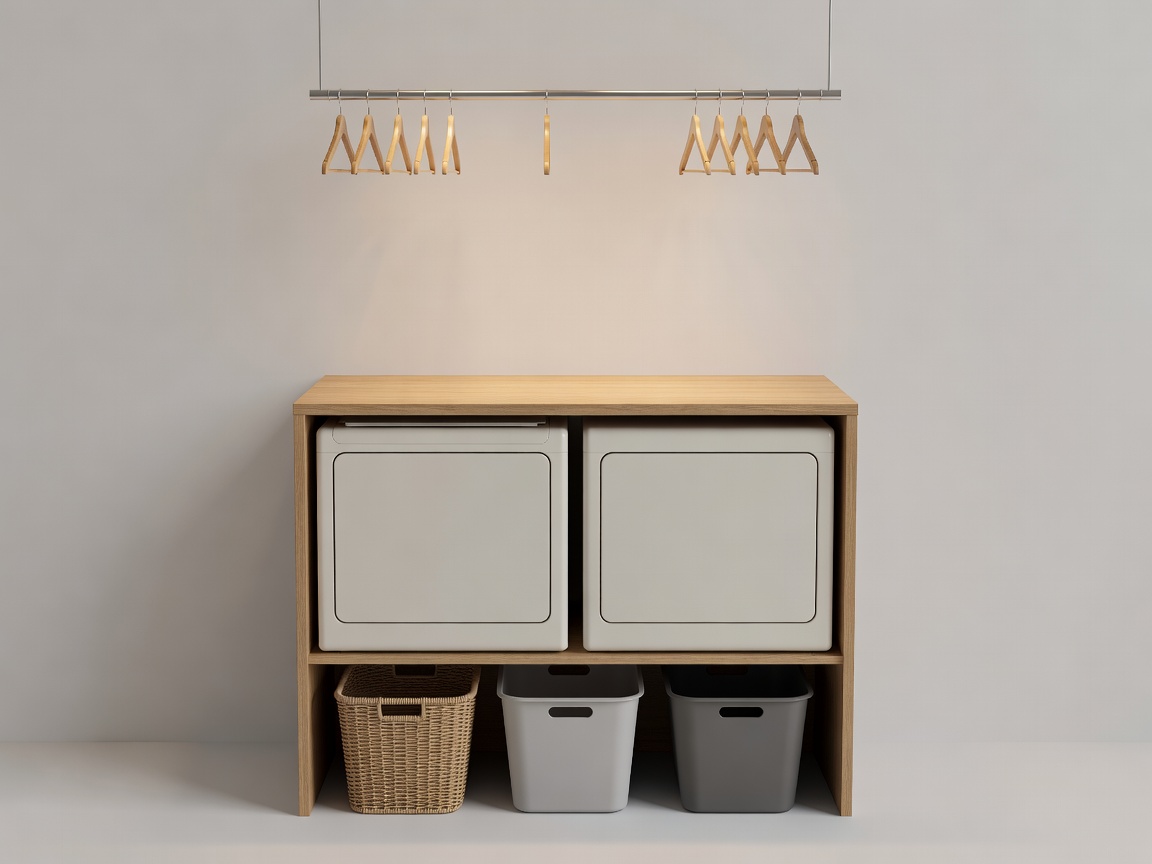
Many homes have no dedicated utility room. A washer under the kitchen worktop, a cupboard in the hallway or a corner of a garage can all follow the same logic. Stack zones vertically when floor space is short: baskets below, machine in the middle, a shelf and hanging rail above. A tension rod inside a cupboard gives you drying space that disappears when the door shuts.
In shared housing, give each person a labelled basket and agree a simple rule, such as "clear the machine within an hour of the cycle ending". Clear rules reduce friction more than clever furniture does.
Air, water and safety
Utility rooms get humid. Open a window or run an extractor fan while washing and drying, and leave the washer door ajar between loads so the seal can dry. Clean the tumble dryer's lint filter after every cycle and empty the water container on condenser models; a clogged filter reduces efficiency and is a known fire risk. Keep the area around the machines free of stored boxes so you can reach valves and plugs in a hurry.
A ten-minute weekly reset
- Return stray items to their zones or to other rooms
- Wipe the folding counter and machine tops
- Clean the dryer lint filter and check the washer seal
- Glance at the stock shelf and add opened spares to the list
- Clear the floor patch so the next basket has somewhere to land